A recent central bank hike pushed its benchmark rate to near 4%, signaling a higher-rate backdrop that influenced housing sentiment across buyers, sellers and agents.
Agents faced two key tasks: resetting seller expectations and helping buyers weigh monthly payments alongside paychecks, groceries, gas, childcare and other budget pressures.
An expert said mortgage rates had already climbed from ~6% in Mid-Q1 to ~7% recently, reflecting oil-driven inflation worries more than the benchmark move alone.
Pressure was expected to appear first in transaction volume, not short-term pricing; an expert said local legislation shaped prices more directly overall.
Officials' projections pointed to at least one more rate increase by Late-Q4, suggesting affordability pressure would persist and brokers faced another season of client conversations.
Author: janineg-com
-
Fed Rate Hike Reshapes U.S. Housing Plans
-
Fed Raises Key Rate to 3.75%-4%
The Fed has just raised its key rate by 0.25%, bringing it to a range of 3.75%-4%—the first increase since July 2023. With inflation still running above the Fed’s 2% target, officials have hinted that another hike could be on the horizon this year. As someone who’s spent three decades navigating the ebbs and flows of the Beverly Hills and Los Angeles real estate markets, I know how shifts like these can impact both buyers and sellers. Whether you’re considering timing a move, strategizing your next investment, or simply wondering how this might affect your purchasing power, staying informed is essential. The Fed’s next meeting is set for October 27-28, 2026, when they’ll take another look at inflation and broader economic trends. In markets where every detail matters, understanding these decisions can help you make choices with confidence.
-
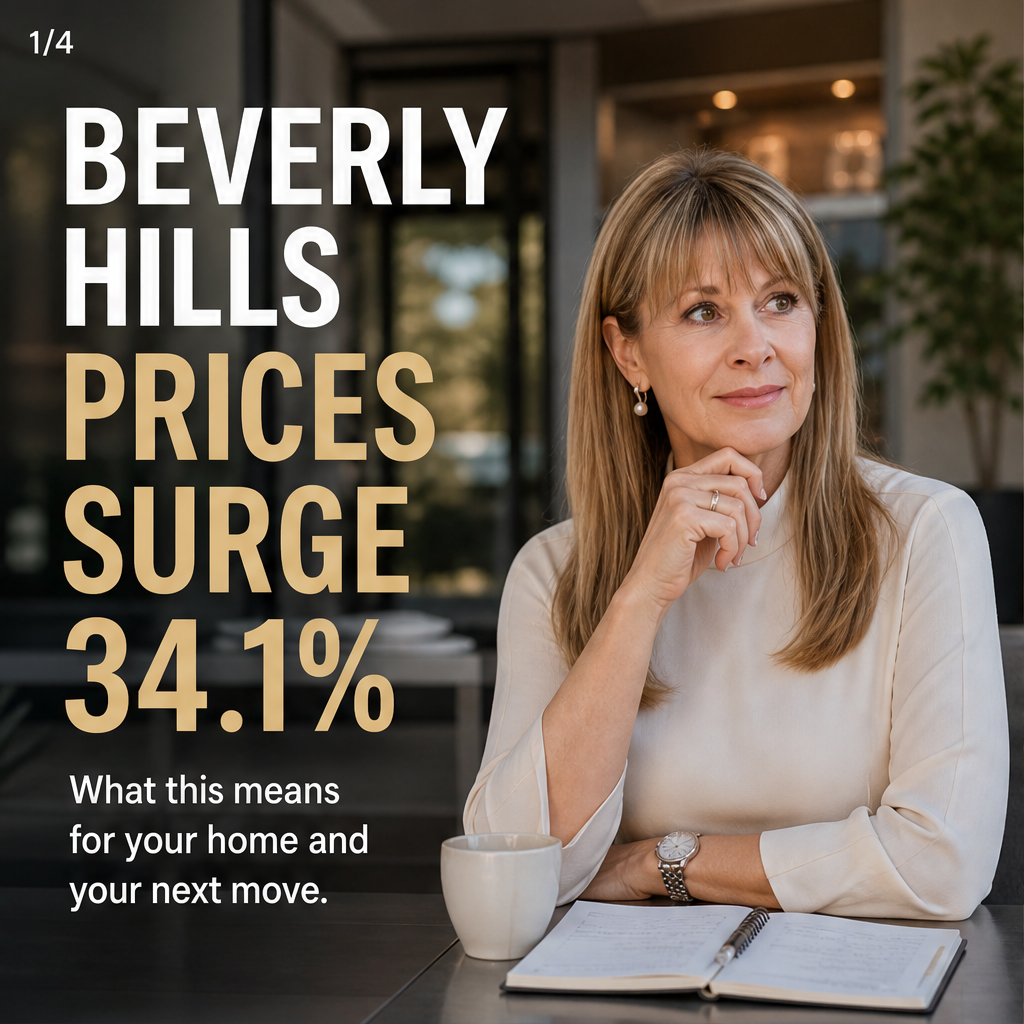
Beverly Hills Prices Surge 34.1%
Beverly Hills continues to command strong luxury-market value. The median sale price reached $4.02 million, up 34.1% year over year, while the median list price climbed 16.7% to $3.96 million. With values at approximately $1,290 per square foot, demand remains resilient. However, homes sold for an average of 96.5% of list price, highlighting the importance of accurate pricing and expert negotiation. Whether you are considering selling, buying, or simply tracking your equity, these trends offer valuable insight into the market. Connect with a Beverly Hills real estate professional for a tailored strategy.
Continue to full article -
An Evening With the Mayor: Beverly Hills, Together
Beverly Hills community members, civic leaders, and business professionals are invited to An Evening With the Mayor: State of the City 2026 on September 23, 2026, at Greystone Mansion. Mayor Craig Corman will deliver the annual State of the City address, followed by a reception designed for connection and conversation. The evening offers a valuable opportunity to hear about city priorities, explore what lies ahead for Beverly Hills, and meet others invested in the community’s future. As a local real estate professional, I’m proud to highlight events that bring neighbors and leaders together. Save the date and join the conversation.
Continue to full article -
California’s Dynamic Population Trends Highlight New Opportunities
Recent research shows that California is one of only five states to experience a population loss last year, with a modest decline of 0.02%—about 9,465 residents—from 2024 to 2025. While overall U.S. growth dipped below 1%, Vermont saw the steepest drop among states. Here in California, our median age stands at 39, with 5.21% of our population under age five and 17.5% over 65.
Having spent my career at the heart of Los Angeles real estate, I’ve witnessed the nuances behind these statistics—how shifting demographics, from young families to aging residents, subtly influence our local housing landscape. My decades of work connecting buyers and sellers across LA, from affordable condos to luxury estates, have given me unique perspective on what these trends may mean for our neighborhoods and clients. Understanding who is coming and going helps inform not only market values, but also the way we approach every transaction in our dynamic city.
Continue to full article -
California’s Down Payment Wait: 14.7 Years
It’s no secret that saving for a down payment in California is a marathon, not a sprint: the current data shows it takes the average household 14.7 years to save up 20% for a median-priced home at $776,200, given a median income of $105,600. For those earning minimum wage, that timeline stretches to a staggering 44.2 years. Geography shapes so much of our market—our coastline, the mountains, and protected open spaces have concentrated demand (and driven up land values) along coveted corridors from Downtown LA to Malibu and beyond. Add to this a longstanding property tax structure that incentivizes homeowners to stay put, and it’s easy to see why inventory is tight. Meanwhile, robust job growth in technology and health care continues to bring new buyers into the market, fueling demand. Unless wage growth can consistently outpace home price appreciation, this saving timeline will remain a reality for so many. As someone who has spent decades helping clients navigate Los Angeles real estate, I can’t emphasize enough how crucial it is for first-time buyers to think strategically and plan for the long term in this unique, dynamic market.
-
Los Angeles Late Summer Home Checkup
As summer winds down in Los Angeles, I always encourage my clients—whether you own a Bel Air estate or a Malibu pied-à-terre—to take advantage of this quieter moment for a thoughtful home checkup. Late summer is an ideal time to assess your property’s comfort, outdoor living appeal, and long-term value, especially before the seasons shift or travel plans call you away.
After months of heavy cooling, your home’s HVAC deserves attention: schedule maintenance, replace filters, ensure air flows seamlessly, and confirm your thermostats and multi-zone systems are properly calibrated. Our city’s signature heat and dry air can be tough on gardens, so now’s the time to inspect sprinklers, drip lines, and drainage—look for dry patches or overwatering, particularly near foundations.
For those with pools, spas, or outdoor kitchens, a quick review goes a long way: water testing, filter cleaning, equipment and gas-line checks, grill maintenance, and pest-proof storage keep your spaces guest-ready. Don’t overlook exterior finishes; the late-summer sun can be surprisingly harsh on stucco, trim, gates, fencing, paint, windows, and entry lighting.
Finally, smart home features and security systems deserve a review—cameras, smart locks, automation, leak sensors, alarms, and temporary access codes should all work smoothly to support your lifestyle. My decades of working with Los Angeles’ most discerning homeowners have shown me that these small, proactive steps not only protect your investment but also ensure your home remains a sanctuary, season after season.
-
California’s cheapest place to live in 2026 is a quaint alpine city less than 3 hours from L.A., where median home prices are just $325,000
As someone who’s spent decades immersed in California real estate—especially here in Los Angeles—I’m always keeping an eye on affordability trends across our state. For those curious about options beyond the hustle and bustle of LA, Porterville is projected to be California’s most affordable city in 2026, with median home prices around $325,000 and rents at $1,358. That’s 12% below the state’s average cost of living. For clients or colleagues evaluating diverse opportunities, it’s worth noting that other accessible markets include Fresno, Bakersfield, and Sacramento. My experience navigating everything from luxury estates to entry-level homes throughout Southern California continually reminds me just how dynamic our state’s real estate landscape can be—there’s truly something for every stage of life and investment goal.
Continue to full article